由中国医疗保健国际交流促进会血液学分会主办,北京大学人民医院血液病研究所承办的2025北京国际造血干细胞移植学术会议于2025年4月25-26日在北京正式举办。本次会议将“移植的艺术(ART OF TRANSPLANT)”为主题,汇集全球领先的血液学专家,探索造血干细胞移植的技术创新和未来趋势,着力破解基础研究向临床应用转化的关键技术瓶颈,为血液系统疾病治疗开辟新维度。《肿瘤瞭望-血液时讯》现场特邀汉堡大学埃彭多夫医学中心Nico Gagelmann,深入解析造血干细胞移植在骨髓纤维化(MF)治疗中的角色演变。
《肿瘤瞭望-血液时讯》您如何看待近十年中造血干细胞移植(HSCT)在骨髓纤维化治疗中的作用演变,特别是随着新疗法和个性化医疗的出现?
Nico Gagelmann:过去十年间,医学界在骨髓纤维化诊疗及干细胞移植领域取得了显著进展,尤其在新型药物应用方面积累了重要经验。随着JAK抑制剂等新型药物的临床推广及其与联合治疗方案的协同作用,我们对患者筛选标准、分子监测技术及分子风险分层体系的理解不断深化。临床实践表明,通过优化移植前干预策略(如有效缩小脾脏体积),可显著改善移植的个体化治疗效果。这种干预措施不仅能降低移植后抗移植物反应发生率及疾病复发风险,更关键的是可显著提升患者总体生存率,尤其在降低干细胞移植早期非复发死亡率方面展现出突破性价值。当前临床实践中,如何进一步提升该类高危患者群体的治疗获益,仍是亟待解决的核心挑战,需要从移植时机选择、预处理方案优化及移植后管理策略等多维度进行系统攻关。
Oncology Frontier-Hematology Frontier:How do you see the role of HSCT evolving in the treatment of myelofibrosis for decade, especially with the advent of new therapies and personalized medicine?
Nico Gagelmann:So we learned a lot over the last decade in myelofibrosis and stem cell transplantation, especially with the new drugs that that came into play with the JAK inhibitors, but also now the combination therapies. We learned more about the patient selection, especially when it comes to molecular monitoring, but also molecular risk stratification. What we learned is that we can individualize the transplant platform by reducing the spleen size, especially before stem cell transplantation, to get excellent outcomes for controlling graft-versus-host disease (GVHD) and low relapse incidents to improve the overall survival of all patients, but much more importantly than non-relapse mortality and to reduce the non-relapse mortality early after stem cell transplantation. And this very challenging cohort is the biggest key we have to address.
《肿瘤瞭望-血液时讯》近年来,针对MF患者移植前的预处理方案有哪些关键改进?这些改进如何提升HSCT的疗效和安全性?
Nico Gagelmann:目前,多项研究证据表明,骨髓纤维化患者的预处理方案强度与临床结局无显著相关性。然而,更为关键的是干细胞移植前的脾脏体积 —— 移植前缩小脾脏体积是实现更佳疗效的重要因素。过去数年的经验显示,将脾脏照射纳入预处理方案可有效在干细胞移植前缩小脾脏体积,与接受脾切除手术或未接受其他治疗的患者相比,能显著改善预后。因此,对于存在严重脾肿大的患者,我们建议避免实施脾切除手术,而采用临床放射治疗。
Oncology Frontier-Hematology Frontier:In recent years, what are the key advancements in preconditioning regimens for MF patients prior to HSCT? How do these improvements enhance the efficacy and safety of the procedure?
Nico Gagelmann:One thing that we learned from multiple studies is that there is no difference in the conditioning intensity for patients with myeloproliferative neoplasms. However, what is much more important is the spleen size before stem cell transplantation, and reducing the spleen size before transplantation is a very significant factor for achieving better outcomes. Our experience over the past years has shown that incorporating splenic irradiation as part of the conditioning regimen is highly effective in reducing splenic volume even before stem cell transplantation, leading to superior outcomes compared to patients who undergo splenectomy or receive no other treatment. We would recommend avoiding splenectomy altogether and instead using clinical radiation therapy in patients with massive splenomegaly.
《肿瘤瞭望-血液时讯》在MF的HSCT中,目前仍存在哪些挑战和局限性,您正在探索哪些研究方向或新方法来解决这些问题并进一步改善治疗结果?
Nico Gagelmann:当前临床实践中亟待解决的核心问题是非复发死亡率(NRM)的持续高发态势。尽管过去十年间患者筛选标准的优化显著改善了治疗结局,但数据显示低危组骨髓纤维化患者的NRM发生率仍处于高位。虽然精准的患者分层是风险控制的重要环节,但同步改进治疗方案同样至关重要。现阶段研究应致力于开发新型干预策略,在维持与异基因造血干细胞移植相当疗效的同时,显著降低治疗强度。这种同步优化筛选体系与创新低强度治疗方案的双重路径,已成为该疾病领域最迫切的临床研究方向。
Oncology Frontier-Hematology Frontier:Looking ahead, what do you see as the most transformative direction for immune checkpoint inhibitors in leukemia?
Professor Lukas Michael Braun:I think combining immune checkpoint inhibitors with allo-HCT shows promise in expanding the boundaries of allo-HCT and lowering relapse rates post - stem cell transplantation. However, there's still much to learn, such as identifying the specific types of leukemia that respond to these therapies. Our preclinical studies indicate that the expression of different ligands is crucial. Now, clinical studies are needed to confirm which patients respond to these therapies, the types of leukemia that can be treated, and whether responses depend on driver mutations. The goal is to be able to differentiate between responders and non - responders before treatment initiation.
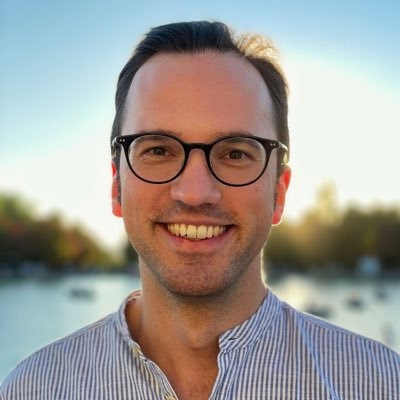
Nico Gagelmann
汉堡大学埃彭多夫医学中心
(Universitätsklinikum Hamburg-Eppendorf ,UKE)
医生、科学家EBMT学员委员会共同创始人兼共同主席EBMT浆细胞疾病CAR-T细胞治疗小组委员会主席